
How to Prepare for an Armenian Engagement: What the Bride's Family Does
By Baghdasaryan ·
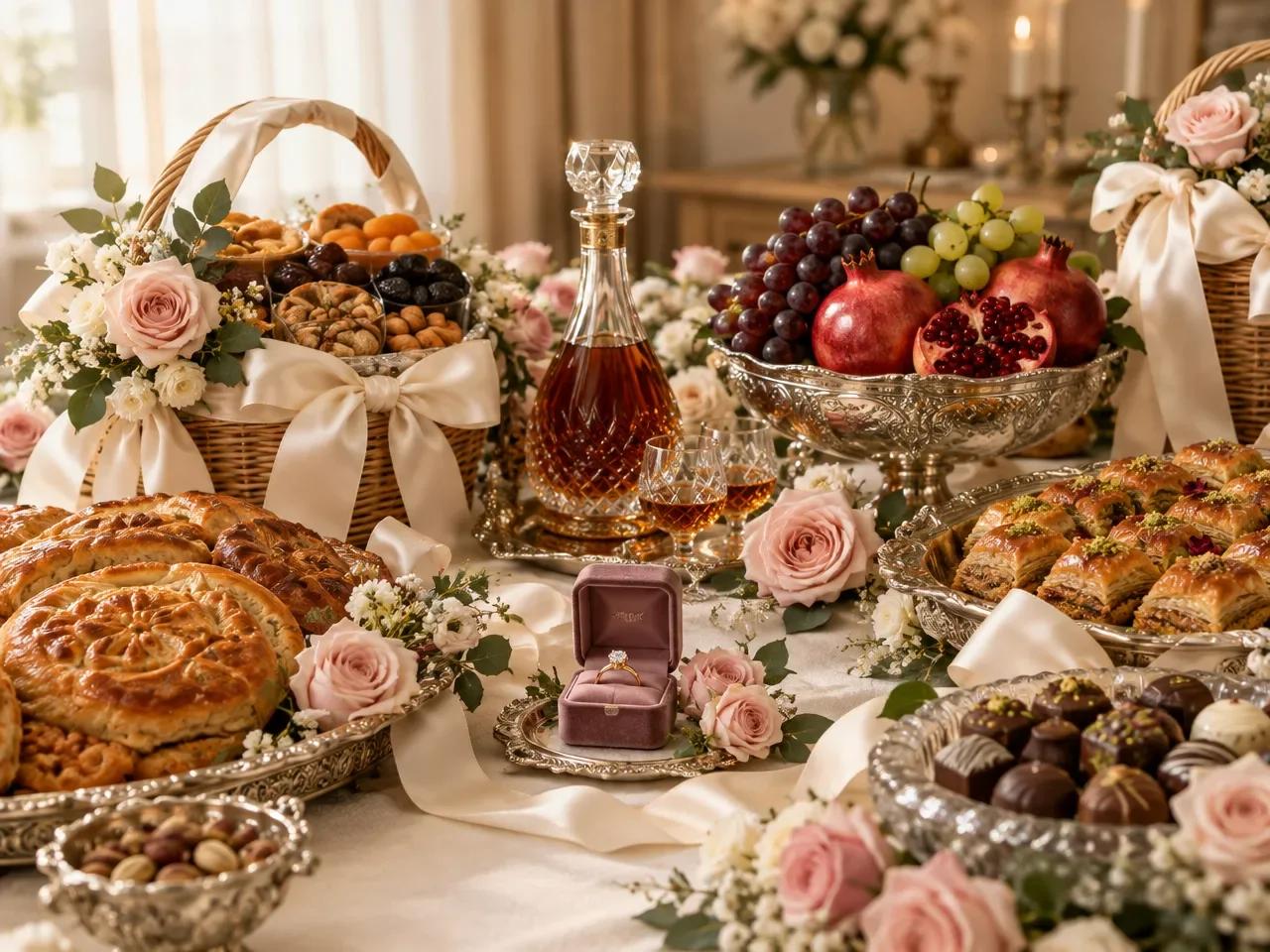
An engagement (nshandrek in Armenian) is one of the most beautiful and symbolic family ceremonies in Armenian culture. It is not only the festive confirmation of two people's decision to marry, but also an important occasion that brings two families together.
In Armenian tradition, the bride's and groom's families each had their own roles and responsibilities in organizing the engagement. Many customs have changed today, but some are still kept.
In this article, we explain how the bride's family can prepare for the engagement, what is customarily organized, which gifts are prepared and how the ceremony usually unfolds.
The bride's family's role in an Armenian engagement
Traditionally, the engagement was held at the bride's family home, where the groom's parents, relatives and other guests were welcomed.
The bride's family was mainly responsible for receiving and hosting the guests. Modern engagements, however, can take place in a restaurant, a banquet hall or an outdoor venue, and the organizing duties can be shared between the two families.
In many families the engagement is preceded by the khoskap — a smaller family meeting where the families come to an agreement, while the engagement itself is the festive, formal celebration of that decision.
It is important to discuss every detail in advance so that the preparations are enjoyable and free of unnecessary disagreements.
1. Choosing the venue and welcoming guests
One of the first steps is choosing where the engagement will take place.
If the celebration will be held at home, you will need to prepare the space for guests, the festive table and the decorations.
If you choose a restaurant, it is a good idea to agree on these in advance:
- the number of guests and the seating plan,
- the menu and drinks,
- the decoration of the hall,
- music and whether you need a host,
- photography and videography,
- where and when the ring ceremony will take place.
Whatever the venue, the key is to create a warm, comfortable atmosphere where both families feel at ease.
2. Getting the bride ready
The bride is one of the main stars of the engagement, and her look usually receives special attention.
The bride's family can help choose the dress, shoes and accessories, and arrange hair and makeup.
Unlike a wedding dress, an engagement dress does not have to be white. Blush pink, ivory, light blue, champagne or any other shade that suits the bride's taste and the overall style of the event works well.
Most importantly, the bride should feel beautiful, relaxed and comfortable.
3. What the bride's family prepares for the engagement table
Hospitality plays an important part in a traditional Armenian engagement.
The bride's family usually sets a festive table with a variety of dishes, appetizers, fruit and sweets.
The table may include:
- Armenian gata and baklava,
- a variety of sweets,
- fresh and dried fruit,
- a celebration cake,
- Armenian dishes and appetizers,
- wine, brandy and other drinks.
What goes on the table depends on the family's preferences, the number of guests and the chosen format.
4. Engagement baskets and trays: who prepares what
Decorated baskets and trays are one of the loveliest customs of an Armenian engagement.
Traditionally, the groom's side may bring the engagement ring, flowers, gold jewelry, sweets, fruit and drinks. These are often presented on beautifully decorated trays or in baskets.
In some families, the bride's side also prepares baskets of sweets, fruit or other treats as a gesture of mutual attention and respect. In many families it is also customary not to return the groom's trays empty, but to fill them with sweets.
The number of baskets, their contents and the order of the exchange can differ between families and regions of Armenia, so it is best to agree in advance which side will prepare what.
5. Which gifts the bride's family prepares
A common question is whether the bride's family is obliged to prepare gifts for the groom or his family.
In some Armenian families it is customary to exchange gifts at the engagement. The bride's side may prepare:
- a gift for the groom,
- symbolic gifts for the groom's parents,
- decorated baskets of sweets or fruit,
- family keepsakes.
None of this is mandatory, though. Gifts should reflect the families' wishes and means, not a need to overspend.
6. How an Armenian engagement ceremony unfolds
An Armenian engagement can vary, but it usually includes the following stages.
Welcoming the guests. The bride's parents and relatives greet the groom's family. The guests are invited in, and the warm family gathering begins.
Asking for the bride's hand. If the families follow the traditional format, a senior member of the groom's family may formally ask for the bride's hand. Today, of course, the engagement rests first and foremost on the couple's mutual consent.
The ring ceremony. One of the most anticipated moments is presenting or exchanging the rings. Depending on family custom, the groom may put the ring on, while in some families the elders of the groom's side do so.
Blessing. Some families invite a priest or arrange a separate church blessing. If a church ceremony is planned, its order should be agreed with the priest in advance.
Congratulations and the feast. After the ceremony come congratulations and toasts, and the festive meal begins.
7. Who pays for the engagement
This is one of the most discussed questions.
Traditionally, when the engagement was held at the bride's home, her family was often the main host, while the groom's side brought the ring, the gifts and the agreed baskets.
Today there is no single rule for splitting the costs. In some families the bride's side covers them, in others the groom's side, and in many cases the two families share them by mutual agreement.
The best solution is to set a shared budget in advance and clearly divide the organizing duties.
8. The most common mistakes when preparing for an engagement
Traditions not agreed in advance. When each family has a different idea of how the ceremony should go, awkward situations can arise.
A guest list nobody agreed on. Decide early how many guests each side will invite so the venue, table and budget can be planned correctly.
Booking services at the last minute. The photographer, decorator, restaurant and other professionals should be booked in advance.
An unclear run of show. Decide beforehand who will greet the guests, when the ring ceremony will take place and who will coordinate the whole event.
Too much focus on formalities. The true meaning of an engagement is the joy of two people and their families, not a competition in spending or gifts.
9. Organizing your engagement with Baghdasaryan Production
An engagement can be a small family gathering or a large, elegant celebration. Either way, good planning lets you enjoy the day without organizational worries.
Baghdasaryan Production offers engagement planning services, from developing the concept to fully coordinating the event. We can help you choose a venue, design the decor concept, and arrange music, a host, photography, videography and any other services you need. To invite your guests, you can also use our digital invitations.
Our goal is for the couple and their families to focus on their happiness while trusting the organization to professionals.
Planning an engagement? Contact us to discuss organizing your event.
Frequently asked questions
Is the bride's family obliged to set the engagement table?
No. Although the bride's family was traditionally often the host, today the format and costs are decided by agreement between the families.
Should the bride's family buy a gift for the groom?
Some families have this custom, but it is not mandatory.
Who buys the engagement ring?
By common Armenian custom, the engagement ring is usually brought by the groom's side.
Is it necessary to invite a priest to the engagement?
No. A family engagement can be held without a priest. If you would like a church blessing, consult the priest in advance.
Can an engagement be held in a restaurant?
Yes. Modern engagements are often held in restaurants, banquet halls or beautiful outdoor venues.