
Armenian Wedding Traditions, Step by Step
By Baghdasaryan ·
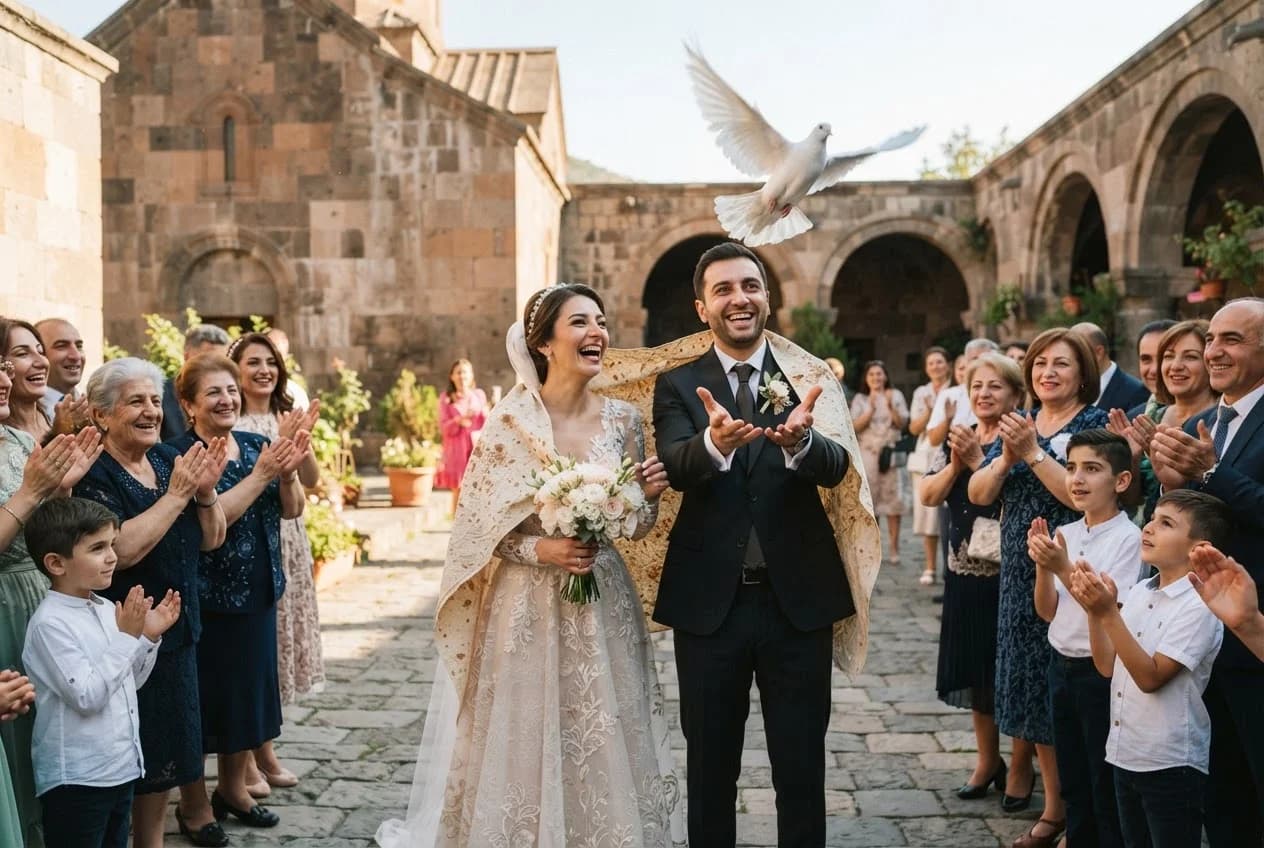
An Armenian wedding is not a one-day event but a chain of rituals, many of which have survived to our time. Traditions vary from region to region and from family to family, but their core meaning stays the same.
1. Khosk-kap (giving the word)
The groom's family visits the bride's home and formally asks for her hand. This is the first official meeting of the two families.
2. Engagement (nshandrek)
At the engagement, the groom's side brings trays (sini) with gifts and the ring, and the bride is considered engaged. More in our article Armenian Engagement.
3. The morning at the bride's home
The groom arrives at the bride's home with his entourage and music and asks her father for his blessing. This is also when the bride is dressed: her brother puts on her shoe, and the groom's side gives him a "gift". In the past, relatives would hide the bride's belt and ask for money to give it back.
4. The church ceremony
In the Armenian Apostolic Church, marriage is one of the seven sacraments. During the ceremony, crowns are placed on the couple's heads, they drink wine from the same cup, and they are bound with a narot, a braided red-and-white or red-white-and-green cord. The kavor (godfather) stands beside the couple. See The Role of the Kavor.
5. Lavash, honey and breaking plates
At the entrance to the groom's home, his mother places lavash on the newlyweds' shoulders as a sign of abundance and gives each of them a spoonful of honey for a sweet life. More in Lavash and Honey. Plates are broken at the entrance to keep away the evil eye.
6. The decorated apple
An apple mounted on a sword or knife, decorated with red and green ribbons and sweets. It stands for a sweet and secure life together.
7. Shabash and the bride's dance
During the dancing, guests throw money over the newlyweds as a sign of prosperity. The harsnapar is the bride's special dance, while Kochari and Tamzara bring all the guests together.
8. Tarosik and gata
Tarosik is a small gift given to guests, especially unmarried young people. The wedding gata is also a sign of prosperity and blessing.
9. Tagverats
A few days after the wedding, the narot is removed at the tagverats, the ceremony that closes the wedding rituals.
Tradition and the modern wedding
Today many couples choose the rituals that matter most to their family and combine them with a modern format. Our team knows how to do this with care. Related reading: Wedding Baskets, The Wedding Ring.
👉 Send a request and we'll help you choose the traditions for your wedding.